Is Pressure Washing Before Painting Necessary for Homes in Navarre, FL?
Key Takeaways
- In most cases, yes. Pressure washing before painting homes in Navarre, FL removes salt residue, mildew, dirt, and chalky paint that prevent new paint from bonding.
- Navarre's location between Santa Rosa Sound and the Gulf means homes collect more salt and mildew than inland properties, which makes washing especially useful here.
- Paint applied over a dirty or chalky surface often peels, bubbles, or fades early, no matter how good the paint itself is.
- Soft washing, a low-pressure method, is safer for wood, stucco, and older siding than high-pressure cleaning.
- Surfaces need time to dry completely after washing, usually 24 to 48 hours or more in humid weather, before any paint goes on.
Table of Contents
- Why Paint Fails on a Dirty Surface
- What Pressure Washing Removes Before Painting
- When Pressure Washing Is Recommended in Navarre
- Pressure Washing vs. Soft Washing: Which One Is Right?
- How Long to Wait Between Washing and Painting
- Should You Wash the House Yourself or Hire a Professional?
- Conclusion
- Planning an Exterior Paint Project in Navarre?
- Frequently Asked Questions
Introduction
Yes, in most cases pressure washing before painting is necessary for homes in Navarre, FL. Exterior paint only bonds well to a clean, sound surface, and the salt residue, mildew, and airborne dirt that build up on coastal homes get in the way of that bond.
Navarre sits between Santa Rosa Sound and the Gulf of Mexico, so nearly every home in the area deals with salt-heavy air and long stretches of humidity. That combination coats siding with a thin film most people never notice until paint starts failing on top of it. Professional pressure washing strips that film away so the new coat can grip bare, stable material instead.
Skipping this step is one of the most common reasons exterior paint jobs fail early in Northwest Florida. Understanding why washing matters, when it is recommended, and how it should be done helps you plan a painting project that holds up to the coastal climate instead of fighting it.
Why Paint Fails on a Dirty Surface
Paint is an adhesive product. It needs direct contact with the siding underneath to cure into a tight, continuous film. Anything sitting between the paint and the surface, whether that is dust, salt, mildew, or old chalky pigment, weakens the bond.
When paint goes on over contamination, the problems usually show up within a year or two. The most common failures include:
- Peeling and flaking, because the paint bonded to the dirt layer rather than the siding.
- Bubbling, when trapped moisture or mildew pushes up from underneath.
- Early fading and staining, since mildew keeps growing right through the new coat.
- Uneven texture, where chalky residue causes patchy absorption.
None of these problems come from bad paint. They come from what the paint was applied over. That is why professional painters treat washing as part of house painting preparation, not as an optional extra.
What Pressure Washing Removes Before Painting
A thorough wash clears away four things that are especially common on Navarre homes.
Salt Residue
Gulf breezes carry fine salt particles that settle on every exterior surface. Salt attracts moisture and interferes with adhesion, and it is often invisible until you wipe a white film off the siding. Homes near the Sound, in Tiger Point, and along the beach roads collect it fastest, but even properties a few miles inland are not immune.
Mildew and Algae
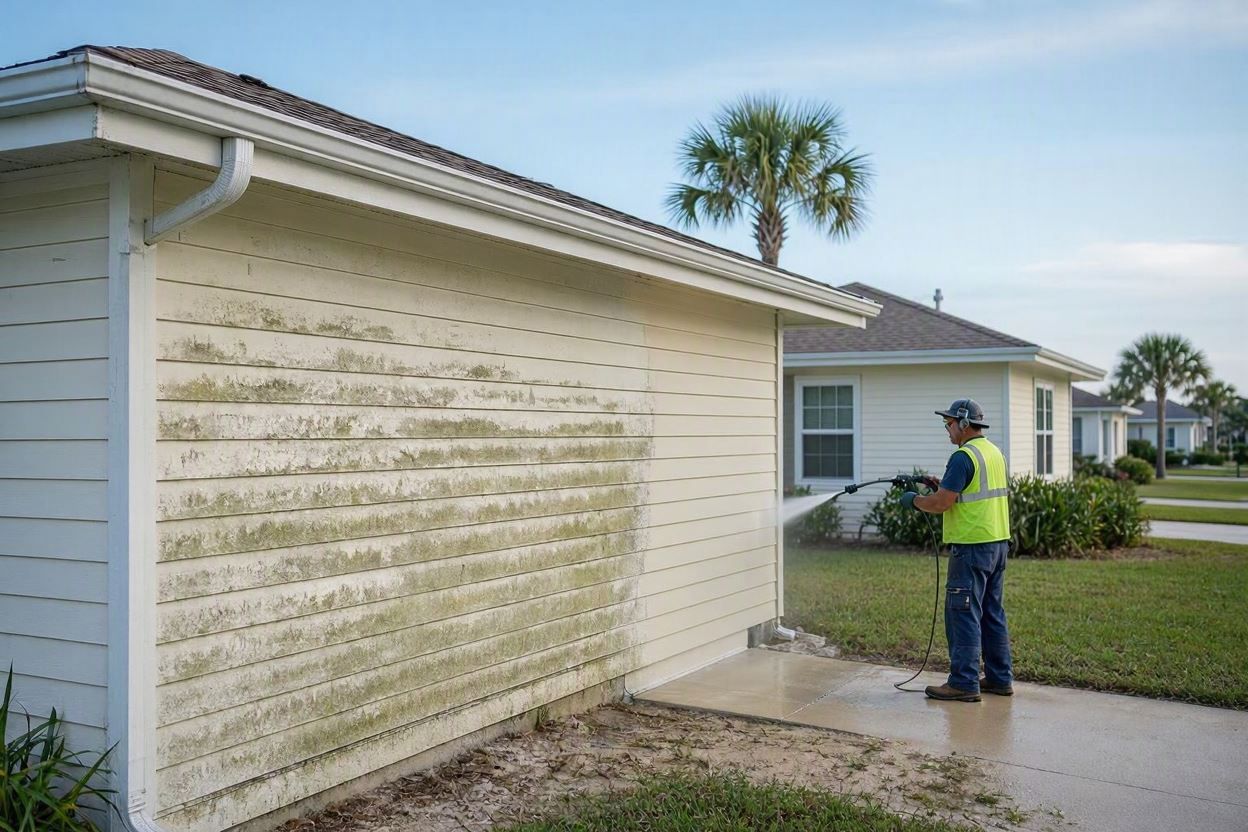
Humidity in this area stays high for most of the year, and shaded north-facing walls rarely dry out completely. Mildew and algae thrive in those conditions. Painting over them seals living growth beneath the new coat, where it continues to spread and eventually stains or lifts the paint. Washing, often with a mild cleaning solution, kills and removes the growth first.
Dirt, Pollen, and Chalking
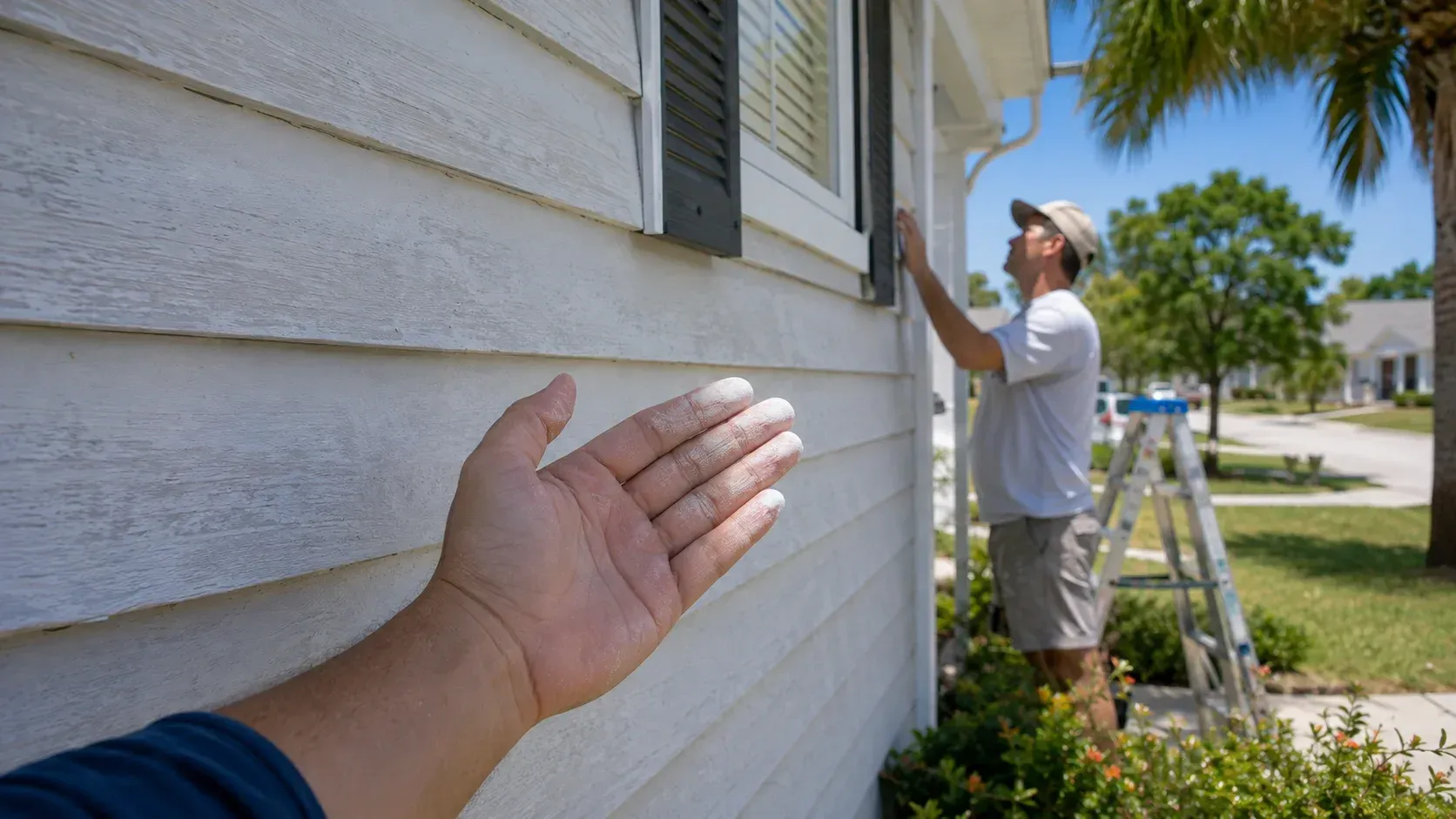
Everyday grime builds up slowly: road dust, pollen, cobwebs, and the powdery chalk left behind when old paint breaks down under UV exposure. Chalking is a big one. If you run your hand across the siding and it comes away powdery, that residue has to come off before repainting, or the new coat will stick to the powder instead of the wall.
Loose and Peeling Paint
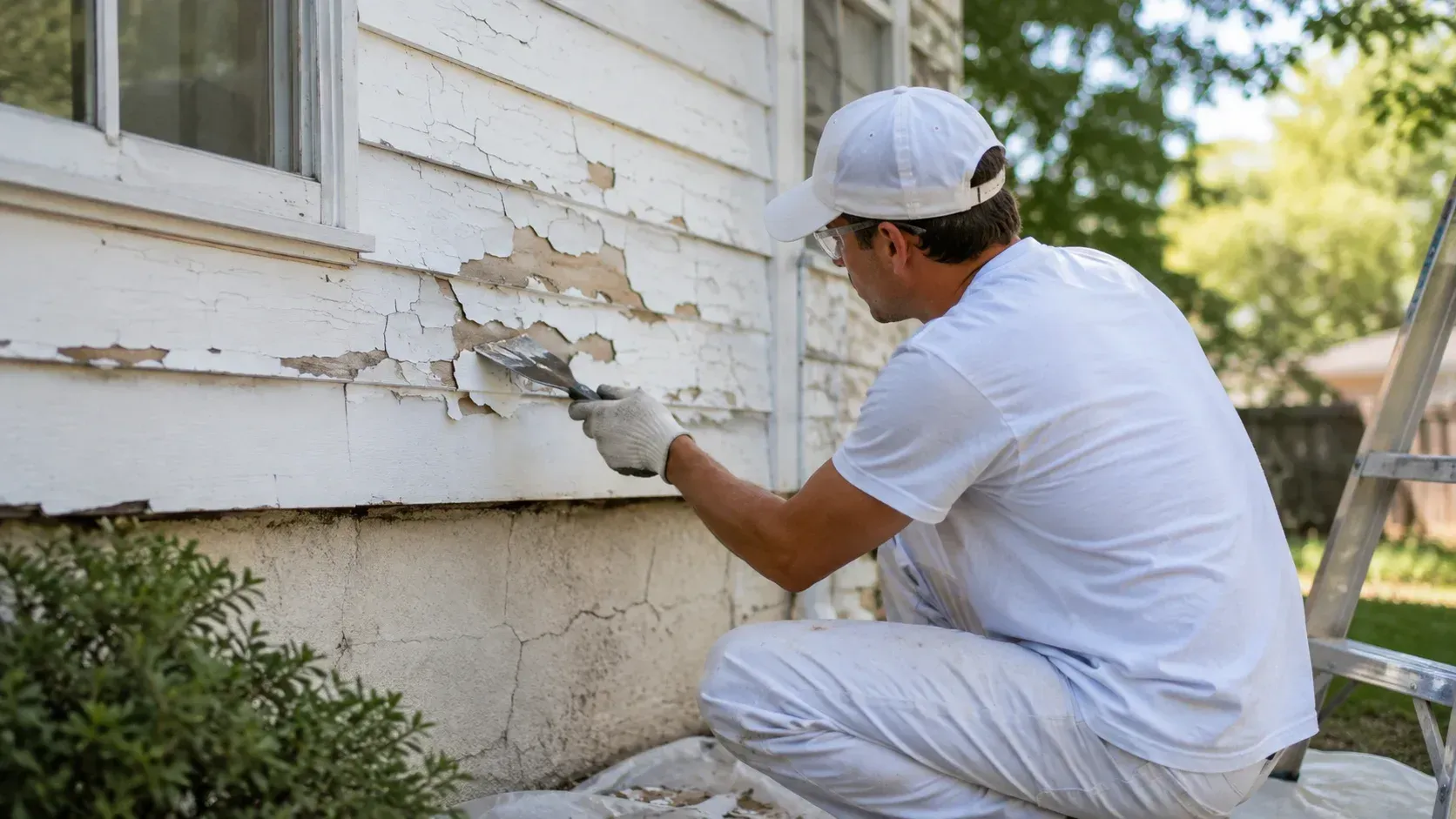
Water at moderate pressure lifts paint that has already lost its grip. This is useful information, not just cleaning. Any paint that a careful wash can remove was going to fail under the new coat anyway. Whatever remains after washing, scraping, and sanding is the sound base a repaint needs.
When Pressure Washing Is Recommended in Navarre
For most exterior repaint projects in Navarre, washing is a standard first step. It is especially worth doing when:
- The home has not been washed in the past year.
- You can see mildew streaks, green tint, or dark staining on any wall.
- The existing paint shows chalking, fading, or peeling.
- The property sits close to the water or gets regular salt spray.
- The previous paint job is more than a few years old.
There are situations that call for extra care rather than skipping the wash. Very old homes with multiple paint layers, soft or rotted wood, failing caulk, or pre-1978 construction (where lead paint may be present) should be evaluated first. In those cases, the cleaning method and pressure level matter as much as the cleaning itself.
Pressure Washing vs. Soft Washing: Which One Is Right?
Not every surface should be hit with high pressure. Water at full force can gouge wood, crack stucco, drive moisture behind siding, and strip paint you intended to keep.
Traditional pressure washing uses higher PSI and works well on concrete, brick, and other hard surfaces that can take it.
Soft washing uses low pressure combined with cleaning solutions that break down mildew, algae, and salt chemically instead of blasting them off. It is the safer choice for wood siding, stucco, vinyl, and most painted surfaces, which covers the majority of homes in Navarre.
An experienced technician matches the method, pressure, nozzle, and detergent to the material. That judgment is a big part of what separates careful exterior painting prep from a rushed job.
How Long to Wait Between Washing and Painting
Paint should never go on a damp surface, and this is where Florida humidity complicates things. After washing, siding needs to dry all the way through, not just on the surface.
In dry, breezy weather, 24 to 48 hours is often enough. In humid stretches, after heavy rain, or on shaded walls, drying can take several days. Wood takes longer than vinyl or fiber cement because it absorbs water into the grain. Painting too soon traps moisture under the film, which leads to the same bubbling and peeling the wash was meant to prevent.
A moisture meter takes the guesswork out of this. Many professional crews check readings before opening a single can of paint.
Should You Wash the House Yourself or Hire a Professional?
Homeowners can rent pressure washers, and plenty of people handle their own washing. It is fair to know the trade-offs before deciding.
DIY washing carries a few real risks: too much pressure can damage siding and window seals, water forced upward under lap siding can soak the wall cavity, and ladders plus a kicking spray wand are a genuinely dangerous combination. Rental machines also rarely come with the right nozzles or detergents for soft washing.
Professionals bring calibrated equipment, mildew-killing solutions, and the experience to read each surface. For homes with delicate siding, multiple stories, or heavy mildew, that experience usually pays for itself. Companies that offer painting services in the Navarre area typically fold washing into the overall prep process, which keeps the timing between washing and painting coordinated.
Either way, the goal is the same: a clean, dry, stable surface before the first brushstroke.
Conclusion
For homes in Navarre, FL, pressure washing before painting is necessary in nearly every case. Salt residue, mildew, dirt, and chalking all interfere with paint adhesion, and this coastal stretch of Santa Rosa County produces all four in abundance. Washing removes those contaminants, reveals loose paint that needs to come off anyway, and gives the new coat a sound surface to bond with.
The method matters as much as the step itself. Soft washing protects delicate siding, adequate drying time keeps moisture out from under the new paint, and honest surface evaluation catches problems like rot or failing caulk before they get sealed in. A paint job is only as good as the preparation underneath it, and washing is where that preparation starts.
Planning an Exterior Paint Project in Navarre?
If you are looking at faded or mildew-streaked siding and wondering what your home actually needs, a straightforward assessment is a good place to start. Fresh Start Painting Inc. provides free, detailed written estimates for homeowners and business owners in Navarre and across the greater Pensacola area, with no pressure attached.
Contact us online or call (850) 346-8319 to ask questions about washing, prep, or timing. You will get clear information you can use to make the right call for your home.
Frequently Asked Questions
Is pressure washing before painting homes always required?
Almost always for exteriors, especially in coastal areas like Navarre. The only exceptions are brand-new, clean surfaces or homes washed very recently. Even then, painters check for dust, chalking, and mildew before starting.
Can I paint over mildew if I use mildew-resistant paint?
No. Mildew-resistant paint slows new growth but does nothing about growth already on the wall. Painting over live mildew seals it underneath, where it keeps spreading and eventually stains or lifts the coating.
How long after pressure washing can you paint a house?
Usually 24 to 48 hours in dry weather, and longer during humid stretches or after rain. Wood siding needs the most drying time. The surface must be dry throughout, not just to the touch.
Will pressure washing damage my siding?
It can if the pressure is too high or the technique is wrong. Soft washing, which pairs low pressure with cleaning solutions, is the safer approach for wood, stucco, vinyl, and painted surfaces.
Does pressure washing remove old paint?
It removes paint that is already loose or failing, which is actually helpful before a repaint. Sound, well-bonded paint stays put during a proper wash. Scraping and sanding handle whatever loose material remains afterward.
Do homes near the water in Navarre need washing more often?
Generally, yes. Properties close to Santa Rosa Sound or the Gulf collect salt spray faster than inland homes. An annual rinse helps limit salt and mildew buildup between paint jobs.
Is pressure washing before exterior painting something I can skip to save money?
Skipping it usually costs more over time. Paint applied over dirt, salt, or chalk tends to fail years early, and repainting a failed surface means paying for the same job twice.
Related Posts