Does Homeowners Insurance Cover Paint Damage From a Roof Leak in Pensacola?
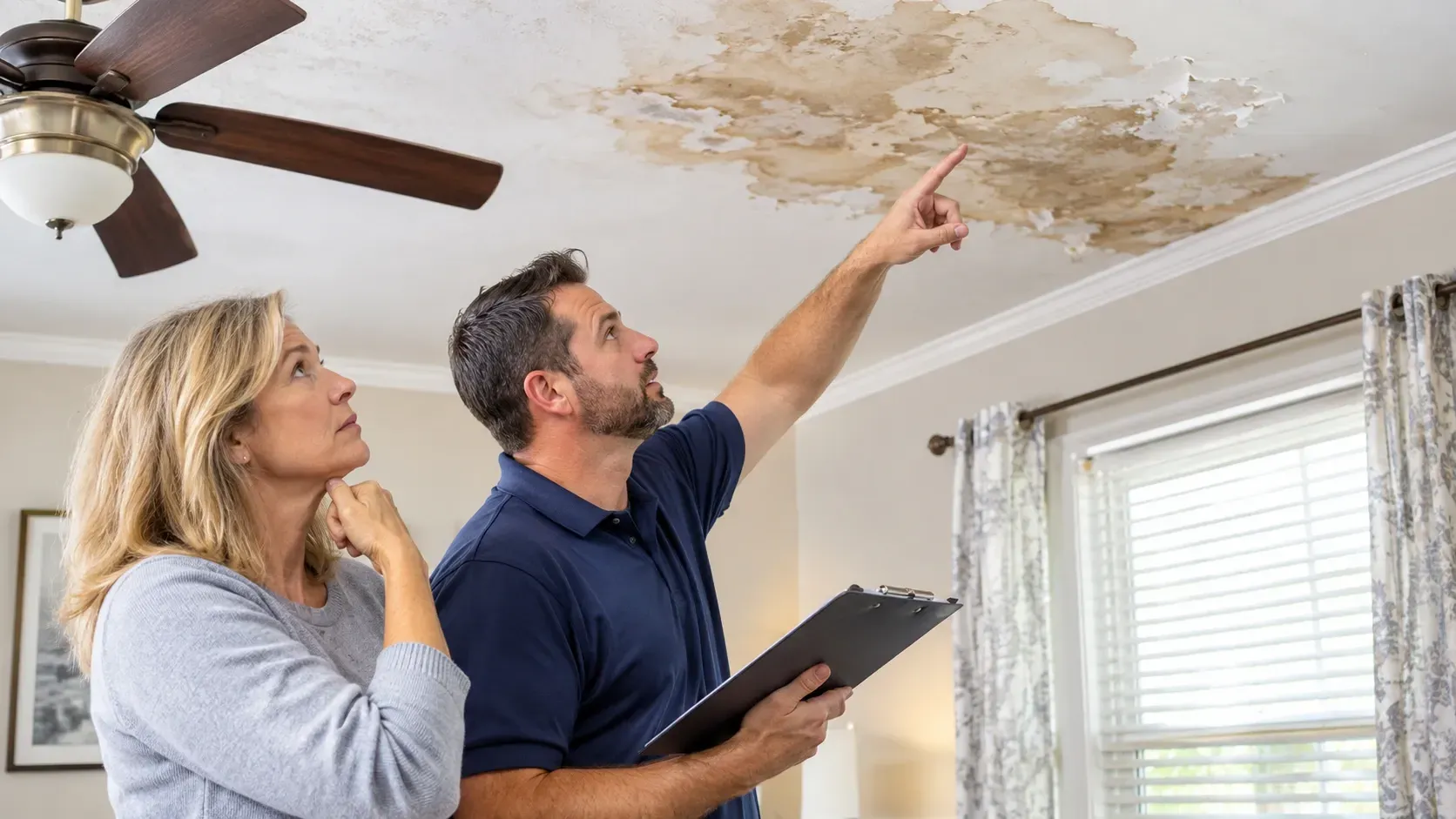
Table of Contents
- Introduction
- Sudden Versus Gradual Decides Most Claims
- What a Policy Usually Pays For and What It Does Not
- Why Roof Leak Paint Damage Claims Get Denied
- Fix the Leak Before Anyone Paints
- What to Photograph Before It Dries
- What a Painter Can and Cannot Do for Your Claim
- Insurance Disclaimer
- Conclusion
- Need a Written Estimate for Your Claim?
- Frequently Asked Questions
Key Takeaways
- Sudden and accidental is usually covered. Gradual and foreseeable usually is not.
- Policies commonly pay for the damage the water caused, not for the roof that let it in.
- A stain that has been there for months is a harder conversation than one from last week.
- Painting before the leak is fixed wastes the money. The stain comes back.
- A detailed written estimate is the most useful thing a painter can give an adjuster.
Introduction
Usually yes when the leak was sudden and accidental, and usually no when it built up gradually, which is the distinction most standard homeowners policies turn on and the one that decides whether your interior repainting ends up on a claim or on your own card.
Policies vary more than people expect, so treat everything below as the general pattern rather than as what yours says. Whether roof leak paint damage lands on a claim comes down to your own contract, and the only document that answers that is your policy.
Sudden Versus Gradual Decides Most Claims
Insurers draw a line between something that happened and something that was happening.
A tree limb puts a hole in the roof during a storm, water comes through that night, the ceiling and walls are stained by morning. That is sudden and accidental, and it is the shape of claim policies were written for.
A flashing detail that has been weeping slowly for two winters, staining a little more each season until somebody finally notices, is a different thing. Most policies treat that as wear, deterioration or deferred maintenance, and those are among the most common exclusions in a homeowners policy.
The awkward part is that the damage looks identical either way. A brown ring on a ceiling does not announce how long it took to form.
Which is why the rest of this is about evidence and sequencing rather than about paint.
What a Policy Usually Pays For and What It Does Not
This catches more people than the sudden-versus-gradual rule does.
The common pattern is that a policy responds to the resulting damage from a covered event, and not to the component that failed. So on a typical claim:
- Usually considered: the stained drywall and ceiling, the repainting of affected areas, insulation, sometimes flooring and contents
- Usually not: replacing the roof itself, which is treated as maintenance of your property
People hear that the leak is covered and understand it to mean the roof is covered. Very often it is not. The water damage inside is the claim; the roof repair is yours.
There is a second wrinkle worth knowing. Repainting one wall of a room rarely matches, and whether a policy pays to continue the paint to a natural break point varies by insurer and by how the policy is written. Ask the question directly rather than assuming either answer. Our water stained walls work includes repairing minor drywall damage before painting, and an estimate can be written either way so you can see the difference.
Why Roof Leak Paint Damage Claims Get Denied
Four reasons come up repeatedly, and three of them are avoidable.
The damage is visibly old. Layered staining, multiple rings, mildew growth or sagging drywall all suggest duration. Reporting promptly matters for this reason alone.
No evidence of the event. If the claim rests on a storm and there is nothing documented from the storm, the insurer is being asked to take the timeline on trust.
The roof was already at end of life. Age and condition of the roof get examined. A roof that was overdue is a harder claim than one that was sound until something hit it.
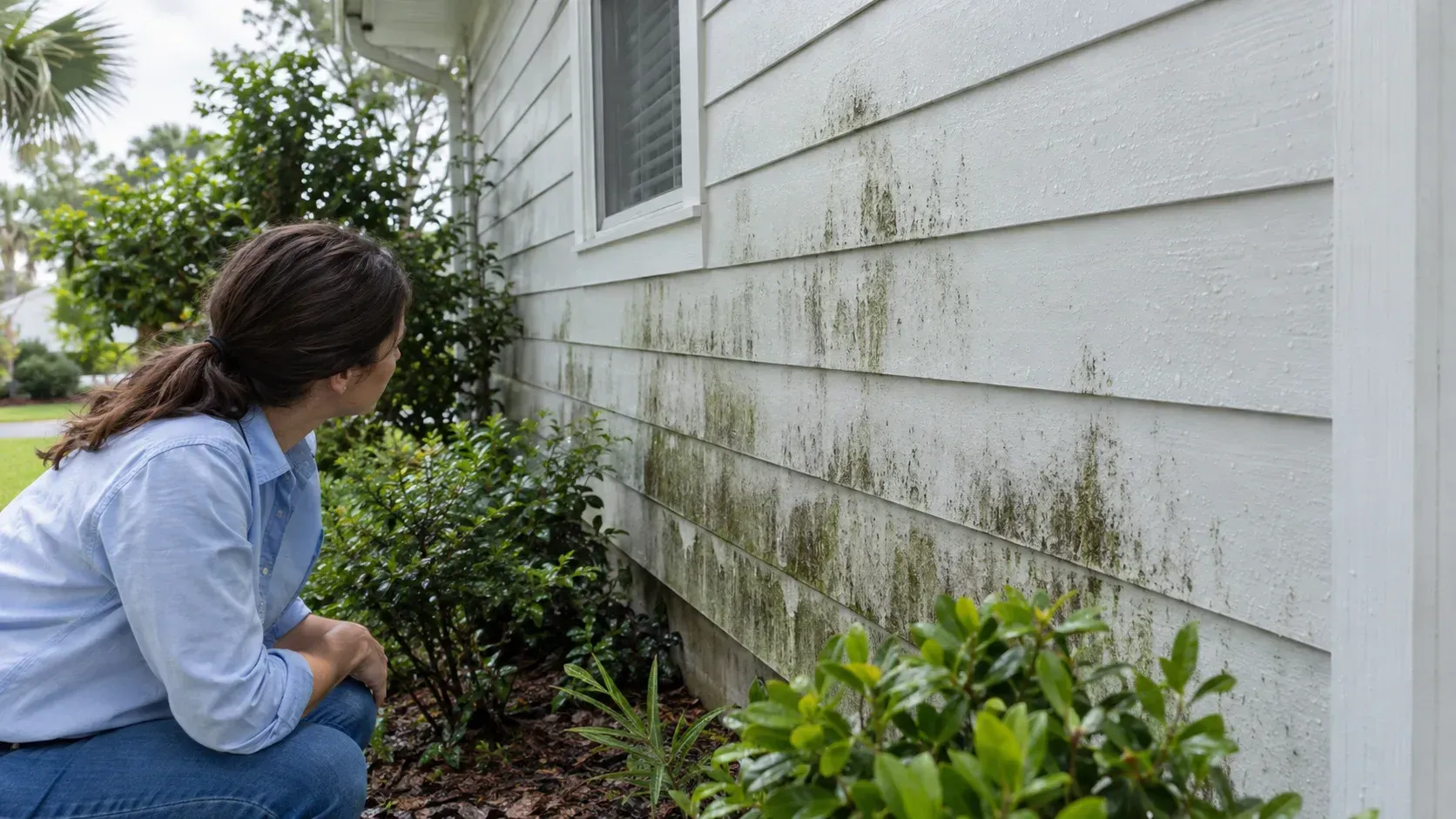
Mold got involved. Mold coverage is frequently limited or separately capped, and a delay between the leak and the repair is exactly what produces it. In this climate that happens faster than people expect.
That last one is the argument for moving quickly rather than waiting to see whether the stain dries out. Humidity here does not let things dry out quietly.
Fix the Leak Before Anyone Paints
We turn down work over this, so take it as meant.
Painting over an active leak is wasted money. Stain-blocking primer will hide a water stain beautifully for a while, and then the stain will come back through, because the source is still there. You will have paid twice and lost the evidence of the original damage in between.
The right order is:
- Stop the water. A roofer, not a painter.
- Let it dry properly. Drywall and framing hold moisture long after a surface looks dry, and in Gulf Coast humidity that takes longer than people allow.
- Deal with any mildew at the source, not by covering it. The same logic applies outdoors, which is why mildew returning on an exterior means addressing the cause rather than recoating over it.
- Then repair, prime and repaint.
Skip to step four and you are buying the same job twice. Any painter who agrees to paint over a leak that has not been fixed is telling you something about how they work.
What to Photograph Before It Dries
Do this before anything gets touched, cleaned or repaired. It takes ten minutes and it is the difference between a documented claim and a described one.
- Wide shots of each affected room showing the whole wall or ceiling
- Close shots of every stain, with the date on
- The source, if you can safely see it, including the attic side
- Anything that was underneath: furniture, flooring, belongings
- The weather event if there was one, and any news or alerts from that day
- Receipts for anything you did to stop further damage, such as tarps or a temporary repair
Keep every estimate and invoice, including ours. And do not throw away what you removed until the claim is settled.
If your home dates to before 1978, there is a second consideration before anyone disturbs painted surfaces, which our piece on lead paint testing covers.
What a Painter Can and Cannot Do for Your Claim
Worth being precise, because contractors overstate this constantly.
What we can do: come out, look at what the water actually affected, and give you a free, detailed written estimate covering the repair and repainting. That document is the single most useful thing a painter contributes to a claim, because an adjuster can work from it. We can write it to show options, such as the affected area alone versus continuing to a natural break point.
What we cannot do: tell you what your insurer will pay, file or negotiate your claim, or promise any outcome. We are a painting contractor. We are not adjusters, we are not a restoration company, and we do not do water remediation or roof work.
If somebody in this trade tells you they will get it covered, they are describing a decision that is not theirs to make.
Insurance Disclaimer
Fresh Start Painting Inc is a licensed painting contractor. Nothing here is insurance advice.
Homeowners policies differ substantially between carriers and between individual contracts, and Florida policies in particular carry terms that vary by property, roof age and coverage selections. The only document that tells you what you are covered for is your own policy, and the only people who can tell you how it applies are your agent, your carrier and the adjuster assigned to your claim.
Read your declarations page, call your agent with specific questions, and get any answer that matters to you in writing.
Conclusion
Report it the day you find it, photograph everything before anybody cleans up, and get the roof seen to before you call a painter. Those three moves decide most of what happens next, and all of them are free. Paint is the last step in this sequence, not the first, and a stain covered before the water stopped is a stain you will be looking at again by spring.
Need a Written Estimate for Your Claim?
Call us out and we will look at what the water affected and put a free, detailed written estimate in your hands before any work starts, in a form you can hand straight to an adjuster. We repair minor drywall damage before painting and we will tell you honestly when the ceiling needs more than paint. Fresh Start Painting has been in business since 2006, more than 20 years, licensed and insured under Florida License #621081, with an A-plus rating from the Better Business Bureau and a satisfaction guarantee on all our work. We serve Pensacola and across Northwest Florida. Call (850) 346-8319 or
request an estimate.
Frequently Asked Questions
Does homeowners insurance cover water damage from a roof leak?
Commonly yes when the leak was sudden and accidental, such as storm damage, and commonly no when it developed gradually from wear or deferred maintenance. Terms vary by carrier and policy, so check your own declarations page and ask your agent.
Will insurance pay to repaint the whole room?
It depends on the policy and the carrier. Some will pay to continue paint to a natural break point so the repair is not obvious, and some will cover only the affected area. Ask the adjuster directly and get the answer in writing.
Does insurance pay to fix the roof too?
Often not. Policies commonly cover the resulting interior damage while treating the roof itself as maintenance of the property. People frequently assume the opposite, so confirm this early rather than after the work starts.
Can I just paint over a water stain?
You can hide it temporarily, but it will come back if the leak has not been fixed. Stop the water, let everything dry fully, address any mildew at the source, then repair and repaint. Otherwise you pay for the same job twice.
Can a painter help with my insurance claim?
Only by providing a detailed written estimate an adjuster can work from. A painting contractor cannot file your claim, cannot negotiate it and cannot tell you what will be paid. Anyone promising coverage is overstating what they know.
Related Posts