Can You Be Held Liable If a Contractor Disturbs Lead Paint While Painting Your Molino, FL Home?
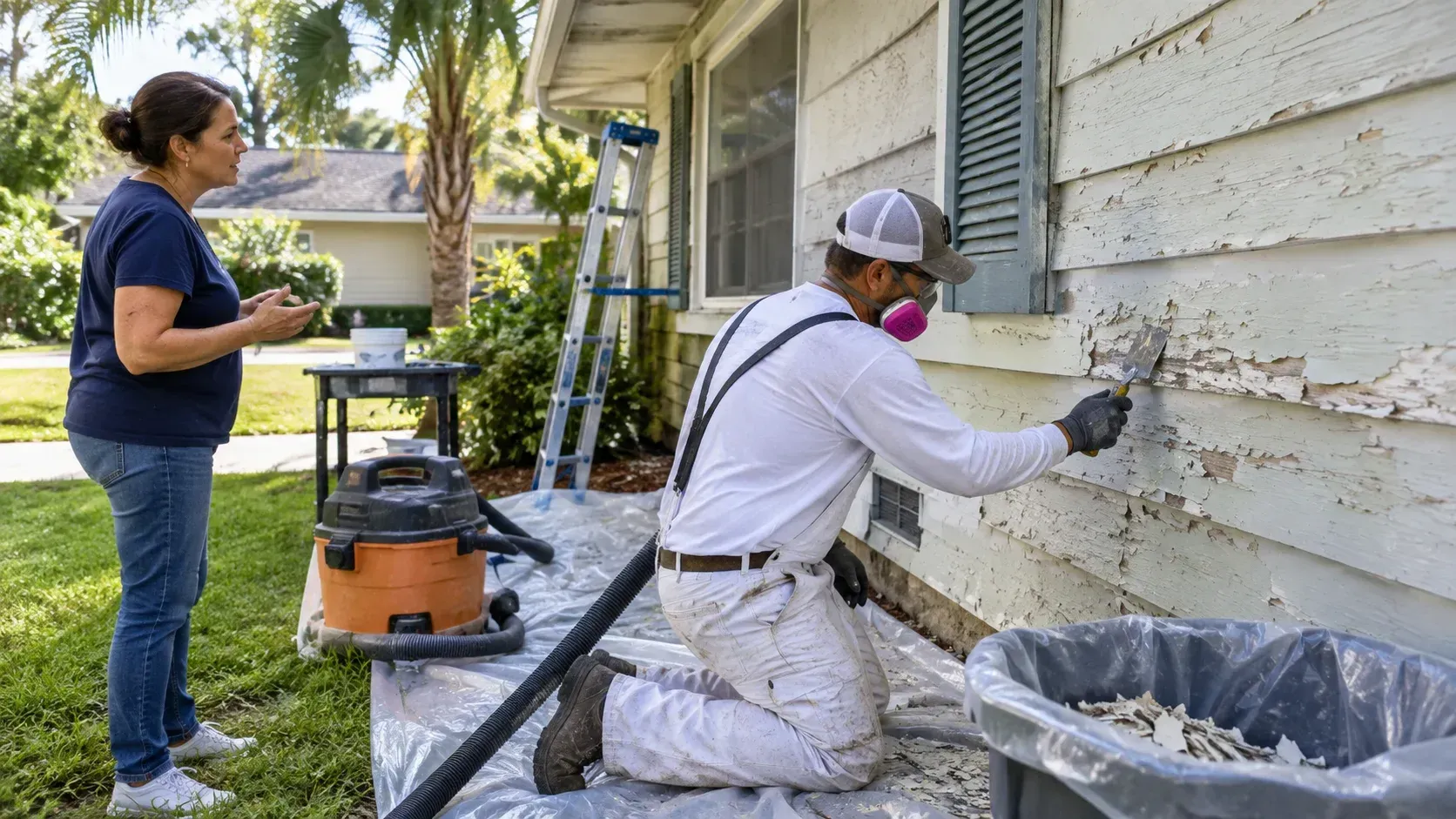
Table of Contents
- Introduction
- Who Is Actually Covered by the Federal Lead Rules?
- Where a Homeowner Can Still Carry Risk
- What Lead Safe Work Looks Like on a Real Job
- What to Ask Before You Sign Anything
- If You Think Lead Paint Was Disturbed
- Conclusion
- Ready to Ask the Right Questions?
- Legal Disclaimer
- Frequently Asked Questions
Key Takeaways
- Homeowners are generally not the regulated party when a paid contractor disturbs lead paint. The contractor is.
- The federal rule that applies to paid renovation and repainting work on pre-1978 housing is the EPA Renovation, Repair and Painting Rule, usually shortened to the RRP Rule.
- Hiring an uncertified firm is the decision that exposes a homeowner to the most practical risk.
- Landlords and sellers of pre-1978 housing carry their own federal disclosure duties, separate from the contractor's obligations.
- Ask for the firm's EPA Lead-Safe certification in writing before work starts, not after.
Introduction
Homeowners are generally not held liable for lead paint exposure caused by a hired contractor's work, because the federal rules governing that work apply to the person being paid to do it. What actually protects a Molino homeowner is hiring a firm that is EPA Lead-Safe certified, since an uncertified contractor disturbing painted surfaces in a pre-1978 home is the party in violation. That makes the question less about blame after the fact and more about what you confirm before an interior repaint in an older Molino house begins.
Molino has a lot of houses old enough for this to matter. If yours was built before 1978, the question is worth five minutes.
Who Is Actually Covered by the Federal Lead Rules?
Lead paint was banned for residential use in 1978. Homes built before then may still have it sitting under newer coats, which is why the age of the house matters more than the condition of the walls.
The hazard is not the lead paint itself sitting undisturbed on a wall. It is the dust created when that surface gets scraped, sanded, or heated during prep. That is the reason the rules attach to renovation work rather than to ownership.
The split in responsibility is fairly clean:
- Paid contractors.
When you hire someone to disturb painted surfaces in a pre-1978 home, the RRP Rule generally applies to that firm and its workers.
- Homeowners doing their own work.
The rule generally does not apply to a homeowner renovating or painting their own residence. That is an exemption from the rule, not a sign the dust is harmless.
- Rentals and child occupied facilities.
These are treated with more care, and landlords carry additional duties.
So if a certified firm follows lead safe practices and something still goes wrong, the homeowner is generally not the one who broke a federal rule. The firm's
certification, training, and work practices are what regulators look at.
That is the compliance picture. It is not the whole risk picture.
Where a Homeowner Can Still Carry Risk
Not being the regulated party is not the same as having nothing at stake. A few situations deserve attention:
- You hire an uncertified firm.
You may not be the one cited, but you own the house, the dust, and the cleanup. Unsafe prep in an occupied home is a problem no matter who gets the paperwork.
- The work is already underway. Once a crew has opened up old coatings without containment, the house is the thing that has to be made clean again, and that cost lands on the property.
- You are a landlord.
Federal disclosure duties for pre-1978 rental housing sit with the landlord, not the painter.
- You are selling.
Sellers of pre-1978 housing have their own disclosure obligations.
- You direct the work yourself. Telling a crew to skip containment or dry sand a wall changes the conversation about who decided what.
- Your insurance. Coverage questions after a contamination claim are between you and your insurer, and they are worth asking about in advance.
None of these are reasons to panic. They are reasons to hire carefully and keep a paper trail.
What Lead Safe Work Looks Like on a Real Job
You do not need to know the rule to recognize whether it is being followed. Lead safe practice is visible from the hallway.
On a job that is being done properly, you should see:
- The work area contained and sealed off from the rest of the house
- Plastic sheeting protecting floors and anything that stays in the room
- Wet methods used instead of dry sanding or high speed grinding
- Surfaces misted before scraping to hold dust down
- HEPA vacuuming and wet wiping during cleanup, not a shop vac and a broom
- A cleanup check at the end, before the containment comes down
If you see open dry sanding in an occupied pre-1978 home with no containment, stop and ask about it. That is the moment to raise it, not after the crew has gone.
It is worth knowing that full lead paint removal is usually not the goal of a repaint. The aim is to disturb as little as possible, contain what does get disturbed, and leave the area clean.
The same thinking applies outside. Scraping and sanding exterior surfaces on an older home spreads chips and dust into soil and across the yard, which is why ground containment matters there too.
What to Ask Before You Sign Anything
Keep it short and ask in writing:
- Is your firm EPA Lead-Safe certified? Ask for the certification itself, not a verbal yes.
- Will the individual workers on my job be trained in lead safe practices?
- Will you test the surfaces, or assume lead is present and work accordingly? Either answer can be correct.
- How will you contain and clean the work area?
- What happens if lead is confirmed partway through?
A firm that works in older neighborhoods should answer all five without hesitating. If you want the testing side of this decision in more detail, that is covered separately inwhether a pre-1978 home needs a lead test before repainting.
Keep the answers. A signed scope of work describing containment and cleanup is far more useful later than a memory of a conversation on the porch.
If You Think Lead Paint Was Disturbed
If prep work opened up lead paint without containment in a pre-1978 home, take it seriously but take it in order.
- Keep children and pregnant household members out of the area.
- Do not dry sweep or vacuum chips with an ordinary household vacuum.
- Write down what you saw, when, and who was working.
- Contact the Florida Department of Health or Escambia County about local requirements and next steps.
- For blood lead testing questions, talk to your physician or your child's pediatrician.
- For questions about responsibility, damages, or a contract dispute, talk to an attorney licensed in Florida.
These are the right offices for the question. A painting contractor, including the one who did the work, is not the authority on your medical or legal position.
Conclusion
The short version is that the federal rules on lead paint put the burden on the contractor, and the practical protection sits in your hiring decision. In a Molino home built before 1978, the one question that does most of the work is whether the firm is EPA Lead-Safe certified and willing to prove it. Ask early, get it in writing, and the liability question usually stops being an interesting question at all.
Ready to Ask the Right Questions?
Before scheduling work on an older home, ask any painter you are considering to show their EPA Lead-Safe firm certification and describe how they will contain and clean the work area. You can put those questions to the Fresh Start Painting team or call (850) 346-8319, and you can see the rest of what they handle for homeowners in Molino and along Highway 29. Fresh Start Painting is a licensed and insured Florida painting contractor, License #621081, and offers free estimates on painting projects.
Legal Disclaimer
This article is general information about how federal lead paint rules commonly work, and it is not legal advice. It does not describe every requirement that may apply to your property, and rules can change. For authoritative guidance, consult the EPA, the Florida Department of Health, or Escambia County. For advice about your specific situation, consult an attorney licensed in Florida.
Frequently Asked Questions
Am I liable if my painter disturbs lead paint in my home?
Generally no. The federal rules on paid renovation and repainting of pre-1978 housing apply to the contractor, not the homeowner. Your practical exposure comes from hiring an uncertified firm, or from being a landlord or seller with separate disclosure duties.
Does my Molino home need a lead test before painting?
Not necessarily. A contractor can either test the surfaces or assume lead is present and use lead safe work practices throughout. Testing can be worth it on larger jobs, since a negative result may remove those requirements.
What does EPA Lead-Safe certified actually mean?
It means the firm has been certified by the EPA to perform renovation, repair, and painting work that disturbs paint in pre-1978 housing, using trained workers and specific work practices. Ask to see the certification rather than relying on a verbal claim.
Do these rules apply if I paint my own house?
The RRP Rule generally does not apply to homeowners working on their own residence. The exemption covers the paperwork, not the dust, so lead safe methods are still worth using in an occupied pre-1978 home.
What are my duties if I rent out a pre-1978 house in Molino?
Landlords of pre-1978 housing have federal disclosure obligations to tenants that exist independently of any contractor's duties. Contact the Florida Department of Health or Escambia County for local requirements, and an attorney for your specific obligations.
Related Posts