Why Does Mildew Keep Coming Back Through Freshly Painted Siding in Humid Pensacola Summers?
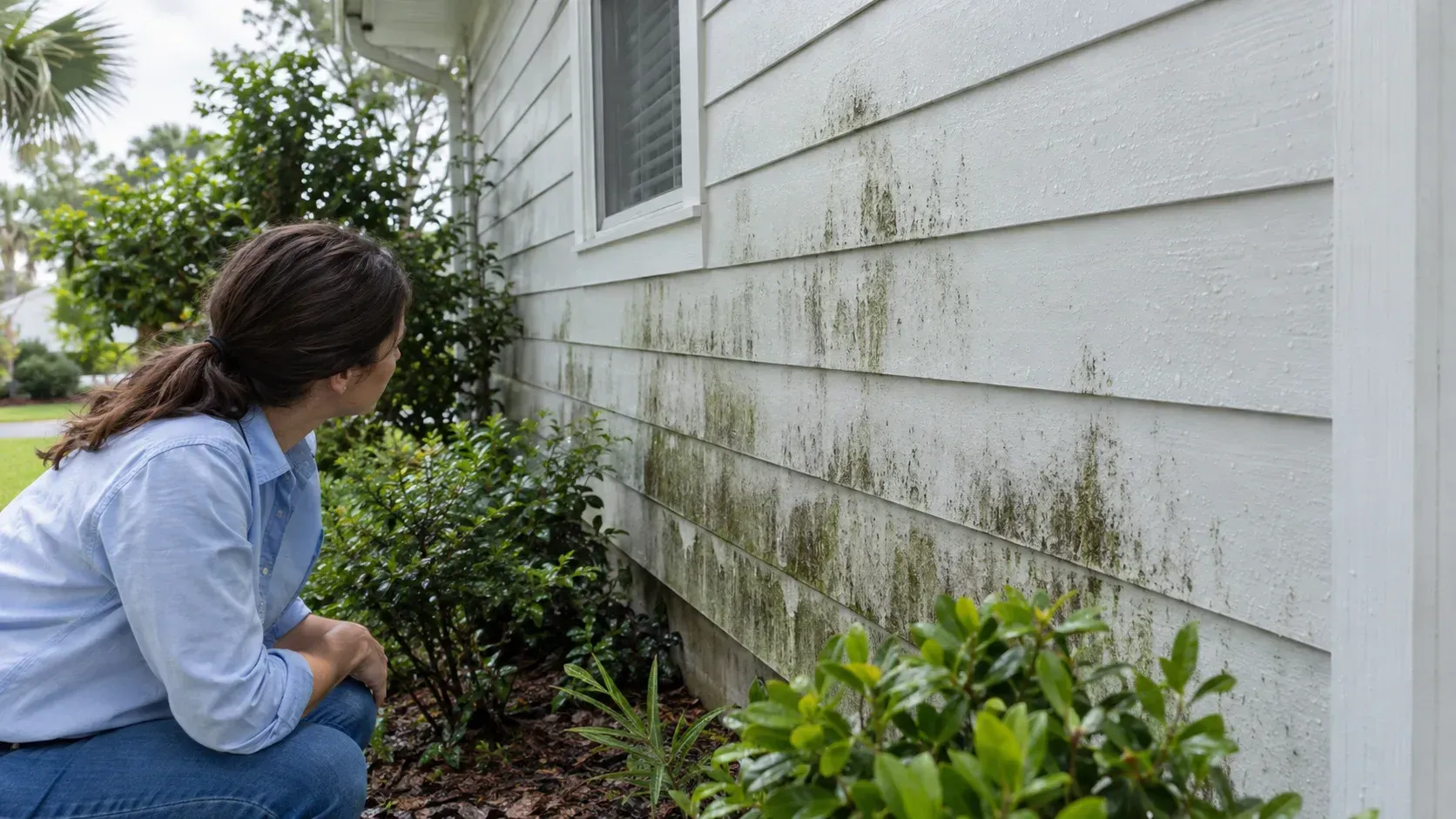
Table of Contents
- Introduction
- Why Does Mildew Grow Back Through Painted Siding?
- Is It Mildew, or Is It Just Dirt?
- Where Mildew Shows Up First on Pensacola Homes
- What Real Prep Looks Like Before a Repaint
- Does Mildew Resistant Paint Solve the Problem?
- Keeping Siding Clean Between Repaints
- Conclusion
- Ready to Stop the Cycle?
- Frequently Asked Questions
Key Takeaways
- Mildew through painted siding comes back because the growth was painted over, not removed. Paint is a coating, not a fungicide.
- Mildew is alive. It survives in the pores of siding, in old caulk, and under loose paint.
- Gulf Coast humidity keeps shaded walls damp long after the rain stops, which is all a surviving colony needs.
- Cleaning the whole wall, rinsing it fully, and letting it dry matters more than the brand of paint that goes on top.
- If a gutter, sprinkler, or leak is wetting the wall, mildew returns no matter how good the paint job is.
Introduction
Mildew through painted siding comes back because the growth was sealed in rather than removed, and ordinary paint is not a fungicidal barrier. In a humid Pensacola summer, a surviving colony has everything it needs to push back through a new coating within a season. The fix is almost never a better paint. It is pressure washing that lifts mildew off the siding instead of pushing it around, followed by a full rinse and a dry surface.
That is also why two houses painted the same week can look completely different by August. One wall was cleaned. The other was covered.
Why Does Mildew Grow Back Through Painted Siding?
Mildew is a living surface growth, not a stain. That single fact explains most of what goes wrong.
When a crew sprays a wall with water alone, the visible dark film comes off. What stays behind sits deeper:
- Spores in the texture and pores of the siding
- Growth in old caulk joints and seams
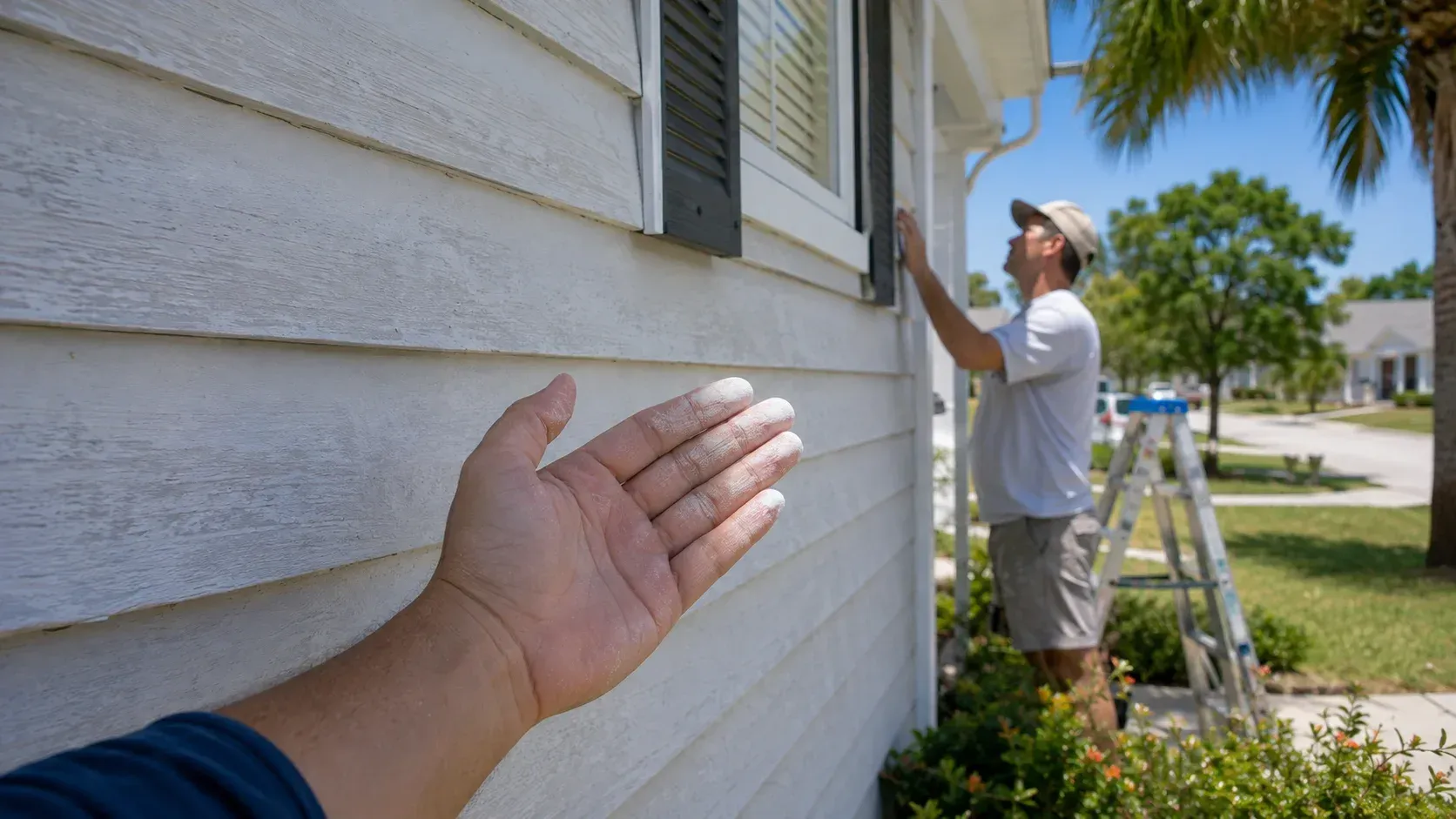
- Colonies under loose or chalking paint
- Residue in shaded corners the spray never reached
A new coat of paint goes over all of it. The film blocks light. It does not block moisture, and it does not kill anything underneath. Dirt, pollen, and residue then settle on the fresh surface and give new spores something to feed on.
Humidity does the rest. Shaded walls on the Gulf Coast stay damp well after a storm passes, and that damp film is enough to restart growth. The same conditions that affect how humidity and temperature change the way a coating dries also keep mildew comfortable on the outside of the film.
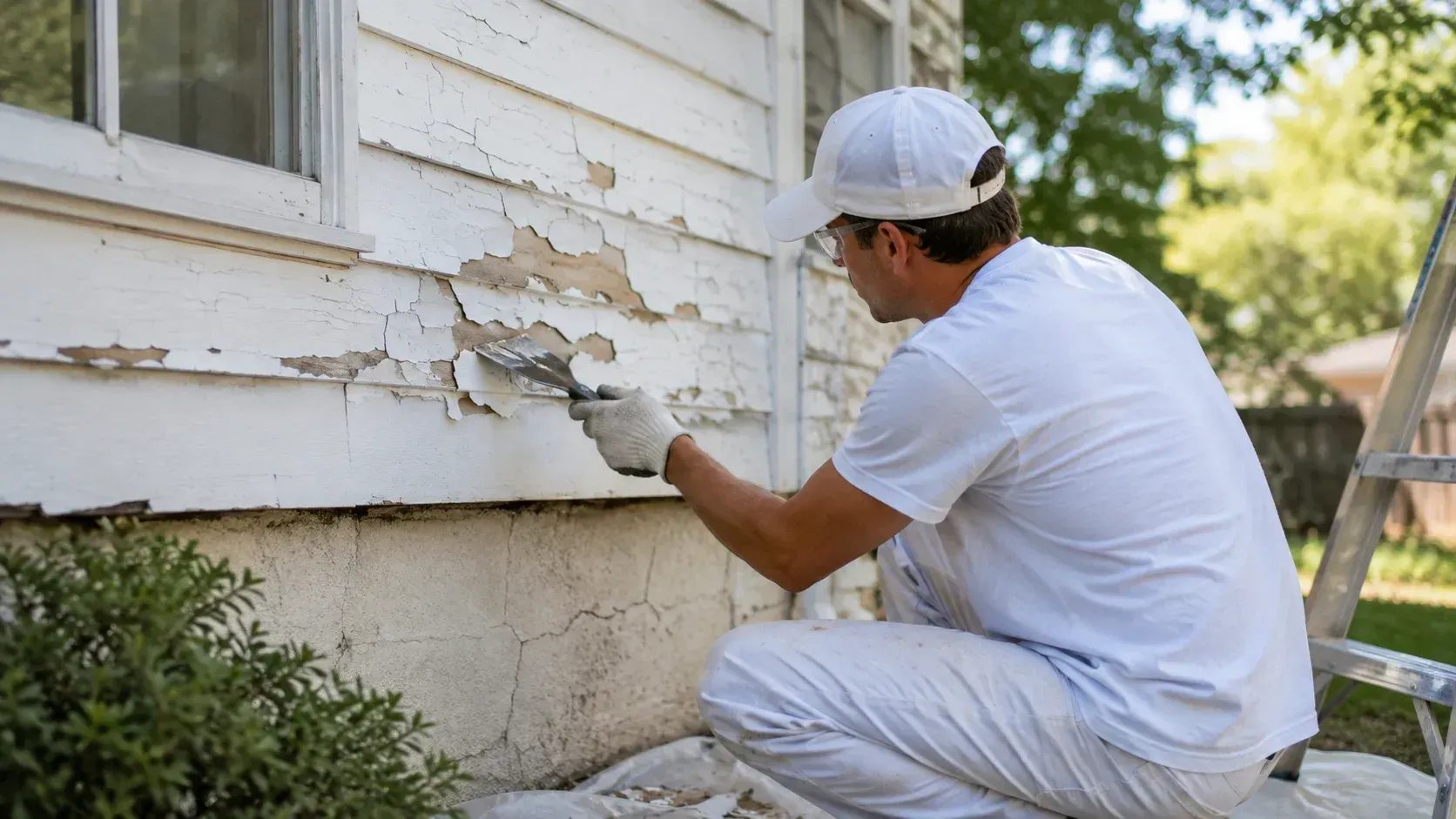
There is a second cost. Paint applied over mildew bonds to the growth rather than the siding. Adhesion suffers, and peeling often follows the staining.
Is It Mildew, or Is It Just Dirt?
Both look like a gray or black film from the driveway. They need different treatment, so it is worth knowing which one you have.
Dirt tends to spread evenly, wipes away with a damp cloth, and collects where rain runs. Mildew on painted siding tends to appear in speckled patches, clusters in shade, and does not wipe off cleanly.
Painters often settle it with a quick spot check. Dab a small, hidden area with a diluted household bleach solution and wait a minute. Mildew lightens fast. Dirt does not change. Wear eye protection, keep the test small, and rinse the spot afterward.
The answer changes the scope of work. Dirt needs washing. Mildew needs washing plus a treatment step, a thorough rinse, and real drying time before any coating goes on.
Where Mildew Shows Up First on Pensacola Homes
Growth follows moisture and shade. On most local homes it starts in the same handful of places:
- North and east walls that get little direct sun
- Under eaves and soffits, where rain never rinses the surface
- Behind shrubs, fences, and anything that blocks airflow
- Within reach of sprinkler spray
- Low on the wall, where mower spray throws soil upward
- Porch ceilings and covered entries
Noticing the pattern is useful. If the mildew is only on one wall, the problem is usually shade and airflow. If it follows a gutter seam or a hose bib, the problem is a water source that paint will not fix.
What Real Prep Looks Like Before a Repaint
Good preparation is the whole job, and it runs in order:
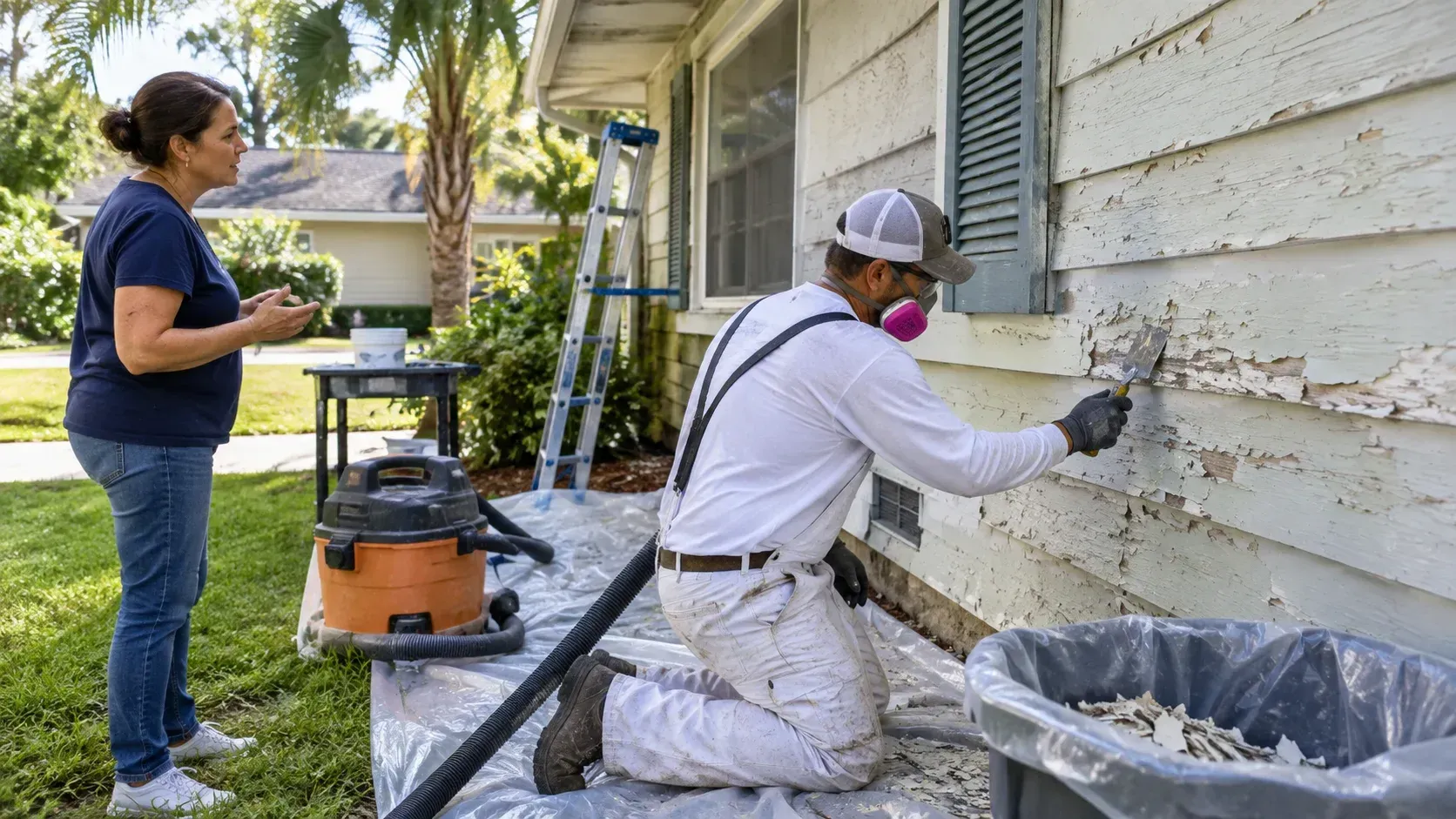
- Clear the way. Trim back shrubs and redirect sprinkler heads before anything else.
- Clean the entire wall. Spot cleaning leaves spores a few feet away, and they move.
- Match the method to the material. Vinyl, hardboard, stucco, wood, and brick all respond differently. Lower pressure with the right cleaning solution usually outperforms raw force, and high pressure can drive water behind siding.
- Rinse completely. Cleaning residue left on a wall can interfere with how the new coating bonds.
- Let it dry. Drying time depends on material, weather, and humidity, not on the schedule.
- Fix the water source. A dripping gutter, failed caulk, bad flashing, or grading that holds water will bring the mildew back.
- Prime bare spots before the finish coat goes on.
This is the same sequence behind any solid exterior repaint, and it is why cleaning the siding before an exterior repaint is treated as part of the paint job rather than an add-on. It also clears upa few stubborn ideas about what a pressure washer can and cannot do, including the belief that more pressure always means a cleaner wall.
Does Mildew Resistant Paint Solve the Problem?
It helps. It does not substitute for cleaning.
Many exterior paints include additives meant to slow mildew growth on the film. On a properly cleaned and dried wall, that buys time. On a dirty wall, it does very little, because the additive is in the coating and the growth is underneath it.
A few things worth knowing:
- Additives wear down over the life of the coating, so resistance fades
- They slow regrowth, they do not kill an existing colony
- Smoother, slightly glossier finishes shed dirt more readily than flat ones
- No additive outperforms a constant water source
Ask your painter what the manufacturer recommends for your siding and your exposure. That answer should be specific to the product, not a general promise.
Keeping Siding Clean Between Repaints
A little maintenance stretches the life of the paint:
- Rinse shaded walls on a regular schedule rather than waiting for visible growth
- Keep shrubs cut back so air moves across the wall
- Aim irrigation away from the house
- Clear gutters so water is not sheeting down the siding
- Treat small patches early, while they are still small
The same approach applies to rental units and storefronts with the same shaded wall problem, where the growth is usually spotted later and has more time to spread.
Conclusion
Mildew through painted siding is a preparation problem wearing a paint problem's clothes. The coating is doing what coatings do. It simply cannot kill what is living under it, and a humid Pensacola summer keeps that growth supplied with moisture. Clean the full wall, rinse it, dry it, and fix whatever is wetting the siding. Then the paint has a fair chance to last.
Ready to Stop the Cycle?
If mildew has come back through your siding, ask how the wall will be cleaned and treated before anyone opens a can of paint. You can
talk through your siding and exposure with the Fresh Start Painting team
or call (850) 346-8319. Fresh Start Painting offers a free consultation on pressure washing and a free estimate on service.
Frequently Asked Questions
Can you just paint over mildew with a mildew resistant paint?
No. Additives in the paint slow new growth on the surface, but they do not kill a colony sealed underneath. Painting over mildew also weakens adhesion, because the coating bonds to the growth instead of the siding. Cleaning first is what makes the additive worth anything.
How long should siding dry after washing before painting?
Long enough to be completely dry, which depends on the material, the weather, humidity, and how much water was used. Dense materials hold moisture longer than smooth ones. A painter should check the surface rather than work from a fixed number of hours.
Does pressure washing alone remove mildew?
Water pressure removes the visible film. On a porous surface it often leaves spores behind in the texture and seams. Appropriate pressure washing or soft washing with a suitable cleaning solution, followed by a full rinse, is what actually clears the growth.
Why does mildew keep returning on only one wall?
That wall is staying wet longer than the others. Usually it faces north or east, sits in shade, has shrubs blocking airflow, or catches sprinkler spray. Changing the moisture and airflow conditions matters more than changing the paint.
Is mildew on siding a sign of a bigger moisture problem?
Sometimes. If growth follows a gutter seam, a hose bib, a window edge, or flashing, water is getting where it should not. Have the source checked before repainting, since paint applied over an active leak will fail again.
Related Posts