Why Does Exterior Paint Turn Chalky and Rub Off on Your Hand in Pensacola's Sun?
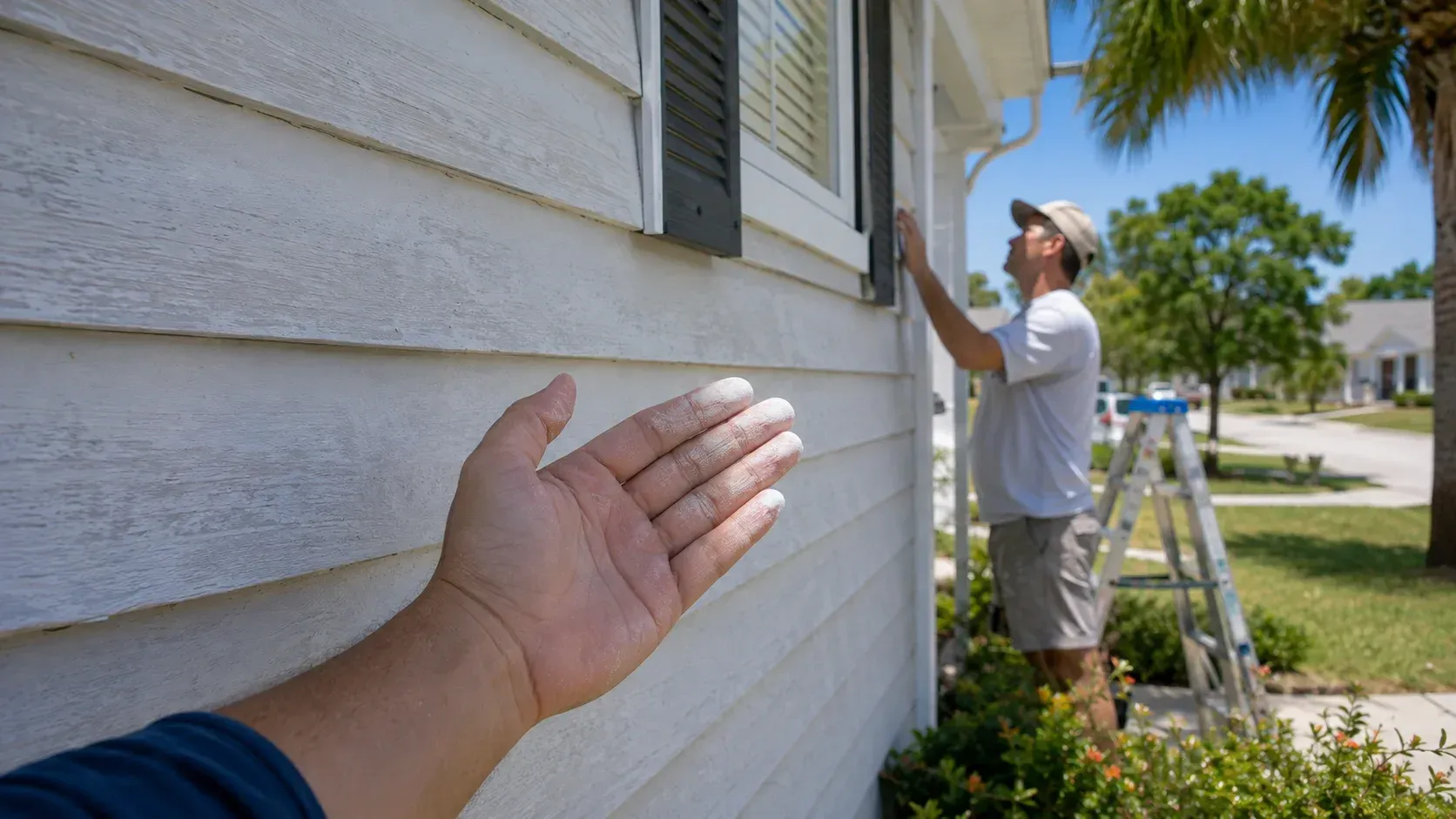
Table of Contents
- The Short Answer
- What Chalking Actually Is
- Why Pensacola's Sun Makes Chalking Worse
- How to Tell If Your Paint Is Chalking
- Is Some Chalking Normal?
- Can You Paint Over Chalky Paint?
- How Chalky Surfaces Are Cleaned and Repainted
- Conclusion
- Frequently Asked Questions
Key Takeaways
- Chalking is the breakdown of the paint's binder by sunlight, which leaves loose pigment powder on the surface that rubs off on your hand.
- Pensacola's strong, year-round UV exposure speeds up chalking, and lighter colors and lower-grade paints tend to chalk sooner.
- A light amount of chalking is a normal part of exterior paint aging, but heavy chalking signals the paint is wearing out.
- You should not paint directly over a chalky surface. The chalk has to be cleaned off first, or the new coat will not bond properly.
- Quality exterior acrylic paints resist chalking longer than budget products, though no paint is immune to UV over time.
Introduction
Exterior paint turns chalky and rubs off on your hand because sunlight slowly breaks down the binder that holds the paint together, leaving loose pigment powder on the surface. That powder is what transfers to your fingers when you touch the wall, and in a place like Pensacola, strong year-round UV makes it happen faster than in cooler, cloudier regions. Understanding chalking is part of planning any exterior painting project on the Gulf Coast, because painting over it the wrong way leads to early failure.
This matters because chalking is easy to misread. Some homeowners assume the paint is simply dirty, while others panic and think the siding is ruined. In reality, chalking is a normal weathering process that becomes a problem only when it goes too far or when it is ignored before a repaint. Knowing where your paint sits on that scale helps you decide whether to wash, repaint, or simply keep an eye on it.
This article explains what chalking is, why Pensacola's climate accelerates it, how to test for it, and how chalky surfaces should be cleaned and repainted so the next coat lasts.
The Short Answer
Question: Why does exterior paint turn chalky and rub off on your hand?
Paint chalks when ultraviolet light from the sun degrades the resin, or binder, that holds the pigment in place. As the binder breaks down, it releases fine pigment particles that sit loosely on the surface as a chalky powder, which rubs off when touched.
This is a chemical process, not dirt. Every exterior paint will chalk eventually because UV exposure is constant and unavoidable. The question is how quickly it happens, which depends on the paint quality, the color, the surface, and how much direct sun the wall gets. In Pensacola, where sun exposure is high most of the year, chalking tends to show up sooner than the paint can label might suggest.
What Chalking Actually Is
Paint is made of two main parts that matter here: pigment, which gives color, and binder, which is the resin that glues the pigment to itself and to the surface. When paint is healthy, the binder locks everything into a solid, continuous film.
UV radiation attacks that binder over time. As it degrades, it can no longer hold the pigment particles, so they loosen and gather on the surface as powder. Run your hand across a chalking wall and you pick up that freed pigment.
Because the powder is pigment, the color of the chalk usually matches the paint. A white house leaves white residue, a tan house leaves tan residue. This is one quick way to tell chalking apart from ordinary dirt, which is usually gray or brown regardless of the wall color.
Why Pensacola's Sun Makes Chalking Worse
Chalking is driven mainly by UV exposure, and Pensacola gets a lot of it. Northwest Florida sees strong sun across most of the year, not just in summer, so exterior paint spends more of its life under active UV breakdown than paint in cloudier climates.
A few local factors stack on top of that:
- South- and west-facing walls take the most direct sun and usually chalk first. It is common to see one side of a house chalking noticeably while a shaded side still looks fine.
- Heat and humidity work alongside UV. While UV is the main driver of chalking, the Gulf Coast's heat and moisture add to the general wear that ages exterior paint. Related weathering is covered in how exterior paint works to protect your home.
- Salt air near the coast contributes to overall paint breakdown, though chalking itself is primarily a UV effect.
A paint rated to resist chalking for a certain number of years may reach that point faster on a sun-facing Pensacola wall than the same paint would in a milder location.
How to Tell If Your Paint Is Chalking
You can check for chalking in under a minute with a simple hand test.
The hand test: Press a dry hand or a dark cloth firmly against the painted surface and rub. If you pick up a noticeable film of powder that matches the paint color, the surface is chalking. A faint trace is minor. A heavy coating that leaves your hand visibly colored means advanced chalking.
To gauge severity, look at how much comes off. Light chalking leaves only a slight residue and is mostly cosmetic. Moderate chalking leaves a clear layer of powder. Heavy chalking comes off in obvious amounts and often pairs with faded, dull color and streaking on the siding below, where rain has washed chalk down the wall.
That streaking is worth noting. Chalk running down over brick, trim, or a lower story is a common sign that the paint above is breaking down and due for attention.
Is Some Chalking Normal?
Yes. A light degree of chalking is a normal part of how exterior paint ages, and some paints are even designed to chalk slightly as a self-cleaning trait. It becomes a problem when chalking is heavy, when color has faded significantly, or when you are preparing to repaint.
Mild chalking on an older paint job is not a sign that anything was done wrong. Paint is a sacrificial layer that protects the surface beneath it, and slow surface breakdown is part of that job over many years.
The practical line is this: light chalking on a wall you are not repainting yet is usually fine to monitor. Heavy chalking, or any chalking on a surface you are about to repaint, needs to be dealt with before new paint goes on.
Can You Paint Over Chalky Paint?
Not directly. Fresh paint applied over a chalky surface tends to bond to the loose powder rather than the solid paint underneath, which leads to peeling, poor adhesion, and early failure. The chalk has to be removed first.
This is one of the most common exterior painting mistakes. A wall can look ready for paint while still holding a layer of powder that quietly undermines the new coat. Skipping the cleaning step is a frequent reason a repaint starts failing within a year or two.
Proper surface preparation is what makes the difference. On a chalky surface, prep means cleaning until the powder is gone, then confirming the surface is sound before priming or painting.
How Chalky Surfaces Are Cleaned and Repainted
Handling chalking before a repaint follows a general sequence. The details vary by home, but the logic stays the same.
1. Wash the surface. The chalk needs to come off. Low-pressure washing with an appropriate cleaner removes most chalking. Professional pressure washing at safe pressure is a common approach, since too much pressure can damage siding.
2. Rinse and test again. After washing and drying, the hand test is repeated. If powder still transfers, the surface needs more cleaning. Heavy chalking sometimes takes more than one pass.
3. Prime if needed. When chalking is stubborn or the surface is very porous, a bonding or masonry primer helps the new paint grip. Some situations call for a primer specifically made to lock down residual chalk.
4. Repaint with a quality exterior product. Higher-grade exterior acrylic paints generally hold up better against UV and resist chalking longer than budget paints. This applies to both walls and any commercial or residential property facing the same sun exposure.
The order matters. Rushing to paint before the chalk is fully removed is what causes most repeat problems.
Conclusion
Exterior paint turns chalky and rubs off because sunlight breaks down the binder in the paint, releasing loose pigment powder, and Pensacola's strong year-round sun speeds that process up. Light chalking is a normal part of how paint ages and protects a home. Heavy chalking, faded color, and chalk streaking down the siding are signs the paint is wearing out and a repaint is worth considering.
The most important practical point is that chalky surfaces cannot simply be painted over. The powder has to be cleaned off, the surface tested and prepped, and a quality exterior product applied for the new coat to last. Checking each wall separately and paying attention to the sun-facing sides gives you a clear read on where your home actually stands.
Dealing With Chalky Exterior Paint in Pensacola, FL?
If your siding is leaving powder on your hand and you are not sure whether it needs a full repaint or just a wash, a professional assessment can help you sort it out. Fresh Start Painting Inc. serves homeowners and business owners across the Pensacola area and can look at how your paint is weathering and what your surfaces need before repainting. Feel free to
get in touch with our team or call (850) 346-8319 with your questions. The goal is to give you clear information so you can decide on the right next step at your own pace.
Frequently Asked Questions
What causes exterior paint to turn chalky?
Chalking is caused by sunlight breaking down the binder that holds paint together. As the binder degrades from UV exposure, it releases loose pigment powder on the surface, which rubs off on your hand. It is a natural weathering process, not dirt.
Is chalky paint a sign I need to repaint?
Light chalking is normal and can be monitored. Heavy chalking, faded color, or chalk streaking down the siding usually means the paint is wearing out and a repaint is worth considering, once the surface is properly cleaned first.
Can I paint directly over chalky paint?
No. Painting over chalk causes the new coat to bond to loose powder instead of the sound surface, which leads to peeling and early failure. The chalk must be washed off and the surface tested before repainting.
How do I know if it is chalking or just dirt?
Rub the surface with a dry hand. If the powder matches the paint color, it is chalking. Dirt is usually gray or brown regardless of the wall color. Chalking also tends to appear evenly across sun-exposed areas.
Does better paint prevent chalking?
Higher-grade exterior acrylic paints resist chalking longer because their binders hold up better to UV. No paint is fully immune, though, since UV exposure is constant. Quality paint slows chalking rather than stopping it entirely.
Related Posts